


Rooted in Trust. Driven by Results.
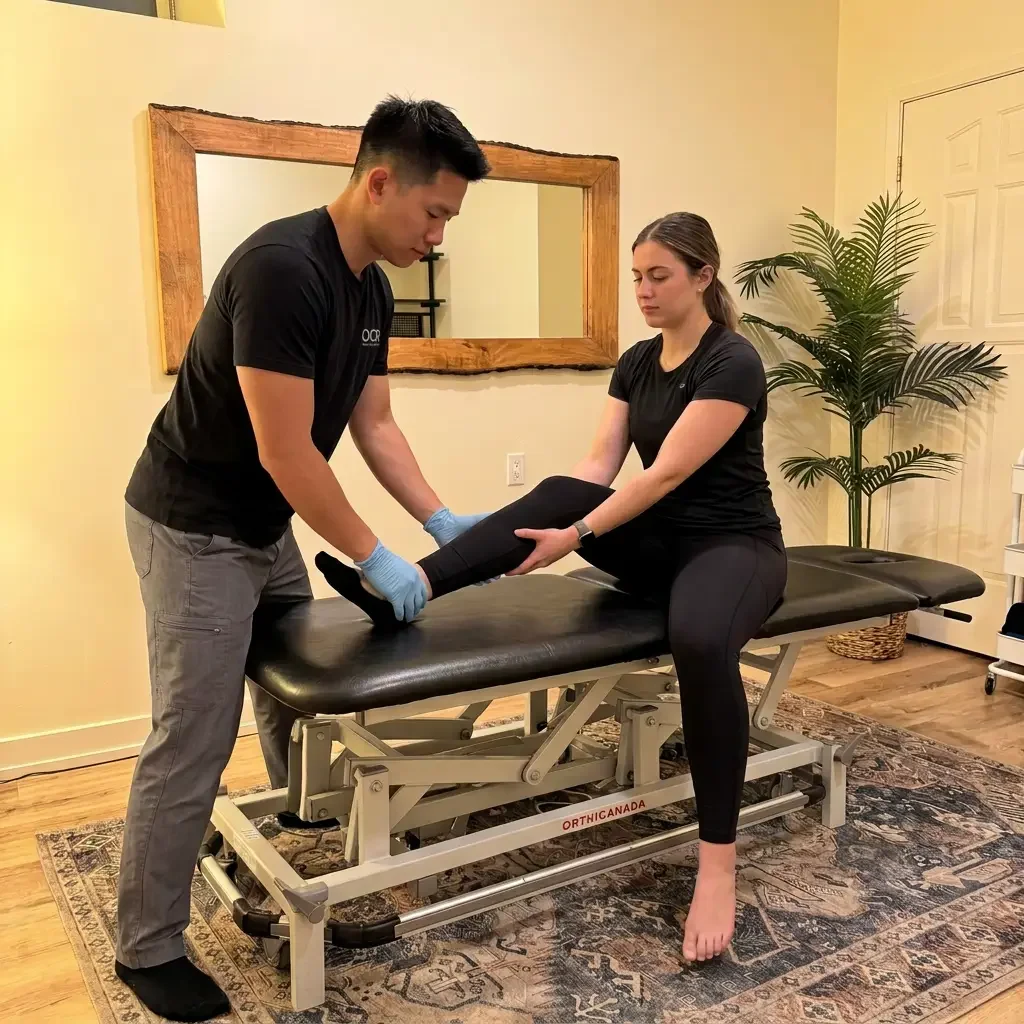
Plantar Fasciitis Treatment with Chiropractic Care on Ossington in Toronto
That sharp, stabbing heel pain that greets you every morning often has a mechanical component — and it may respond to targeted, hands-on care. At Ossington Chiropractic and Rehabilitation, our experienced practitioners conduct a thorough assessment of your full kinetic chain to help identify and address contributing factors in your plantar fasciitis. Stop dreading Toronto's hard sidewalks. Same-day appointments are available.
What Are the Signs of Plantar Fasciitis?
Plantar fasciitis has a way of announcing itself — usually the moment your foot hits the floor in the morning. If any of the following sounds familiar, you are in the right place:
A sharp, stabbing pain in your foot or heel with your very first steps out of bed
Heel or arch pain that flares after long periods of sitting, driving, or standing during your TTC commute
Foot pain that eases slightly once you get moving, but returns and worsens after prolonged activity
Difficulty and discomfort walking on hard Toronto sidewalks, concrete floors, or uneven urban surfaces
You have likely already tried rest, stretching, or over-the-counter pain relief. If the pain keeps coming back or progressing, it may be time for a professional clinical assessment that helps address contributing mechanical factors.
How Does Chiropractic Care help with Plantar Fasciitis?
Chiropractic care is a manual, hands-on approach to the musculoskeletal system — and its clinical scope extends well beyond the spine to address foot conditions. For plantar fasciitis, the focus is on identifying and helping to improve the biomechanical factors that place excessive stress on the plantar fascia. This means carefully assessing your full kinetic chain: the foot, ankle, knee, hip, and pelvis. All of these structures influence how load is distributed with every step on Toronto's pavement.
Treatment is genuinely multi-modal. Your practitioner may use specific joint adjustments to help restore restricted movement in the foot, ankle, or pelvis; apply soft-tissue therapies like myofascial release to address tightness in the calves; and prescribe rehabilitative exercises to rebuild load tolerance. Depending on your presentation, complementary therapies like electro-stimulation, kinesiology taping, or acupuncture may be safely incorporated.
The goal is not simply to quiet the pain temporarily. It is to help address the biomechanical factors that may be contributing to your heel pain, supporting a more durable recovery.
What Our Patients Are Saying
Hearing from someone who has managed persistent heel pain can be reassuring when making decisions about your own professional care. Many of our patients arrive at OCR after months of managing plantar fasciitis independently — with stretches, rest, and over-the-counter medications that provided only temporary relief. They leave having completed the meaningful work: a thorough clinical assessment, targeted hands-on chiropractic treatment, and a structured plan to help restore the daily comfort and mobility they had stopped expecting.
What Should You Expect from Treatment at OCR?
Initial Assessment:
Your first visit involves a comprehensive mechanical and functional evaluation. We assess your gait, foot and ankle mobility, and pelvic alignment to identify kinetic chain factors. We then discuss our clinical findings and collaboratively set realistic recovery goals.
Treatment Sessions:
Each session is highly hands-on and tailored to your specific needs. Expect a combination of manual therapy to the foot, ankle, or pelvis; targeted soft-tissue work on the calves and plantar fascia; and progressive rehabilitative exercises to rebuild tissue load tolerance.
Recovery Timeline:
Treatment duration typically spans 6 to 12 sessions. Many patients report a distinct reduction in sharp morning heel pain within 3 to 5 visits. A full course is designed to address the underlying biomechanical factors to support a durable return to active city living.
How Do Plantar Fasciitis Treatments Compare?
When dealing with persistent heel pain, weighing your active options is a helpful step. Here is an honest overview of how chiropractic care compares to common conservative alternatives — designed to help you make an informed treatment decision.
Chiropractic Care Identifies and works to improve mechanical restrictions across the kinetic chain using joint adjustments, soft-tissue therapy, and functional rehabilitation. Non-invasive and drug-free; aims to address biomechanical factors that may contribute to heel pain. Cortisone Injection Reduces acute inflammation quickly. May not address underlying mechanical factors; some patients find heel pain symptoms return over time. Physiotherapy Focuses primarily on exercise-based rehabilitation and muscular strengthening. A strong complementary approach; some patients also benefit from manual joint work where kinetic chain factors are involved. At OCR, our chiropractors and physiotherapists work together to provide optimal care. Rest and NSAIDs May help manage short-term pain and localized inflammation. May not address joint restrictions or soft-tissue tightness; some patients find pain recurs upon returning to normal activity.
The most suitable clinical approach depends on your specific symptom presentation and biomechanics, making a thorough assessment important.
Our Chiropractic Service at OCR
If you are ready to move past temporary relief and address the factors contributing to your heel pain, chiropractic care at OCR is designed to help. Every registered practitioner on our team is clinically trained to assess and address plantar fasciitis — guiding you from the first comprehensive mechanical evaluation through to functional recovery. We are committed to supporting you every step of the way.
To explore our approach, understand what a typical session involves, and learn how our team helps you return to moving comfortably, visit our chiropractic care service page.
Why Choose OCR for Your Plantar Fasciitis Care
Every musculoskeletal clinic approaches plantar fasciitis in its own way. At OCR, our registered practitioners are fully trained to assess it thoroughly and address it with a tailored plan.
Full Kinetic Chain Assessment
We look well beyond the foot to help identify contributing restrictions in the ankle, knee, hip, and pelvis — because that is often where mechanical factors originate.
Experienced, Hands-On Practitioners
Our clinical team regularly helps Toronto's active urban community — from recreational runners to professionals on their feet all day.
Genuinely Multi-Modal Treatment
We combine manual joint adjustments, soft-tissue therapy, rehabilitation, acupuncture, electro-stimulation, kinesiology taping, and shockwave therapy, selecting the right tools for your specific presentation.
Partnered Recovery
Pain relief is our immediate priority, but functional recovery — helping you return safely to full daily activity — is our shared goal with every patient.

Insurance and Direct Billing
Many Ontario extended health benefit plans cover chiropractic care based on your practitioner's credentials. This means your plantar fasciitis treatment sessions are generally eligible under your standard annual chiropractic benefits, regardless of whether the care addresses a foot condition rather than the spine. We recommend contacting your insurance provider directly to confirm your specific coverage limits.
Please note that OCR does not currently offer direct billing. However, we provide detailed, itemized clinic receipts after each visit for straightforward submission to your private insurer.
Areas We Serve
OCR is conveniently located on Ossington Avenue in Toronto's vibrant West End. Our modern clinic is transit-accessible and highly walkable, making it a very practical choice for patients who find it difficult to drive. We regularly treat patients from Trinity-Bellwoods, Dufferin Grove, Little Portugal, Roncesvalles, and Parkdale, alongside commuters from across the greater city.
Same-day clinical appointments are available — making it easy to take the first step toward addressing your foot pain without a long wait.
Book Your Appointment for Plantar Fasciitis Care
Same-day clinical appointments are frequently available at our OCR clinic on Ossington Avenue. Do not endure another painful morning step — take action toward real relief with a comprehensive kinetic chain assessment and a dedicated hands-on treatment plan built around your recovery. Our clinical team is ready to support you.
Frequently Asked Questions: Plantar Fasciitis and Chiropractic Care
-
Many patients require 6 to 12 treatment sessions for a comprehensive plantar fasciitis recovery. Most patients report a noticeable reduction in sharp morning heel pain within the first 3 to 5 visits. We monitor your specific progress and adjust your customized treatment plan as needed throughout the process.
-
Each session involves hands-on care tailored to your foot biomechanics and current presentation. Treatments may combine manual joint adjustments to the foot, ankle, or pelvis alongside targeted myofascial release on the calves. We integrate progressive rehabilitation exercises and may use kinesiology taping when it is appropriate for your recovery stage.
-
Cortisone injections can reduce localized inflammation quickly, but they may not address the mechanical factors that contribute to plantar fasciitis, and symptoms sometimes return. Chiropractic care aims to address these biomechanical factors to support lasting function rather than focusing only on short-term pain relief. Your practitioner can help you weigh the options based on your individual presentation.
-
Physiotherapy places a strong emphasis on exercise-based rehabilitation and muscular strengthening. If exercises alone did not fully resolve your pain, joint restrictions may remain along your kinetic chain that have not yet been addressed. Chiropractic care adds targeted manual joint adjustments that may help improve these contributing factors, and the two approaches can also work well together.
-
Many Ontario extended health benefit plans cover chiropractic care based on your practitioner's credentials, regardless of the body part being treated. Your plantar fasciitis visits generally align with standard annual chiropractic benefits. We recommend confirming your specific coverage limits directly with your insurance provider, and we provide detailed clinical receipts for easy submission.
-
Complete rest is rarely the most effective approach for active fascial issues. Our aim is to keep you as mobile as safely as possible throughout your recovery. During your assessment, we will review your current activity load and recommend any short-term modifications that may help support the healing process without sidelining you entirely.
-
Many extended health insurance plans in Canada include chiropractic coverage. The amount reimbursed depends on your provider and plan details. Patients are encouraged to review their policy before their first visit. Clinics often provide receipts that can be submitted to insurance providers for reimbursement.
“Rooted in Trust. Driven by Results.
Humbly serving the Ossington community and beyond, with care and compassion since 2015.”