


Rooted in Trust. Driven by Results.
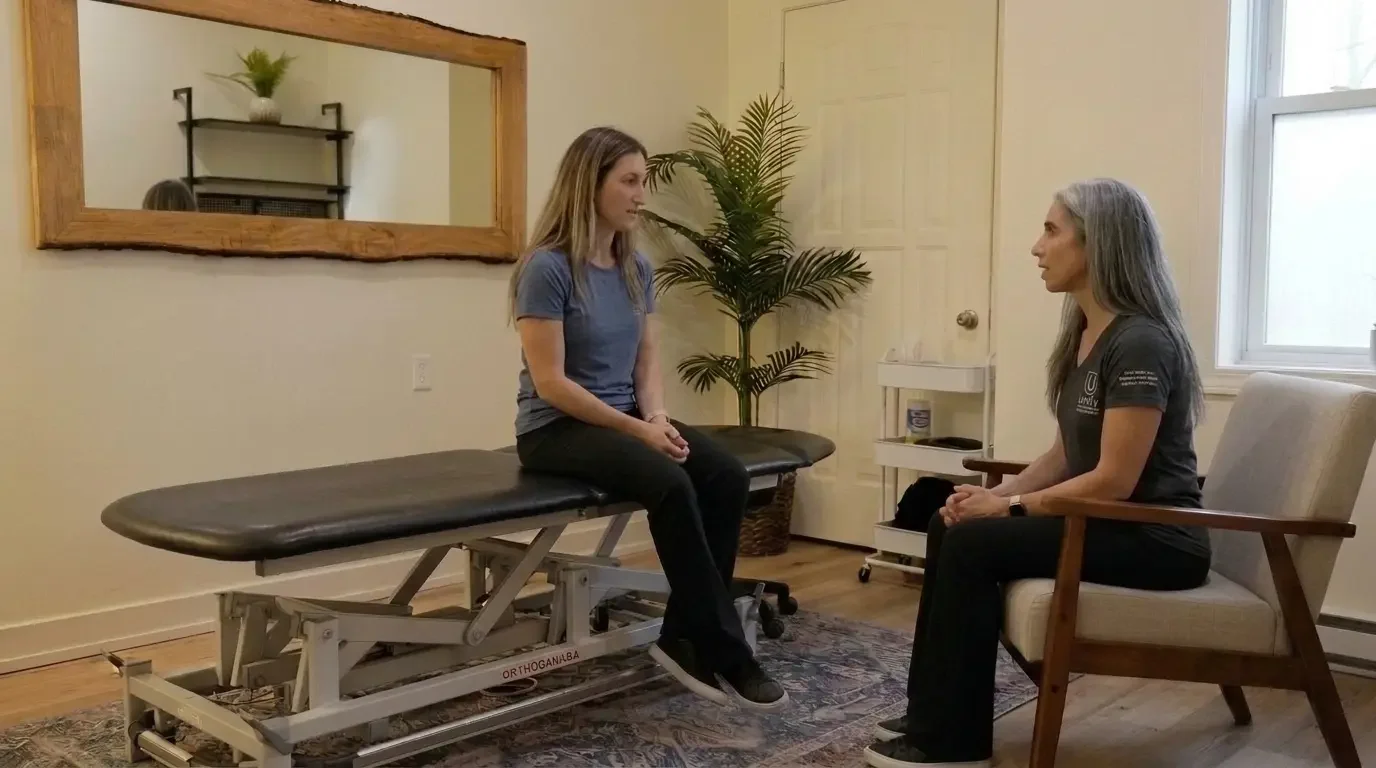
Diastasis Recti Physiotherapy on Ossington Avenue, Toronto
If your core still feels disconnected — months or even years after delivery — you are not imagining it, and there is still a genuine opportunity for recovery. At Ossington Chiropractic and Rehabilitation (OCR), Natalie Di Croce will conduct a thorough assessment of what is happening beneath the surface, then build a hands-on physiotherapy program designed to help you return to the activities that matter most to you. Dedicated, partnered support is available every step of the way.
Book your assessment today and take the first concrete step toward functional recovery.
What Are the Signs of Diastasis Recti?
Diastasis recti frequently presents in ways that are easy to dismiss or attribute to simply "not being back to normal yet." If any of the following feel familiar in your daily life, they may point to abdominal separation that would benefit from targeted clinical attention.
Visible doming or coning along the midline of your abdomen when you roll over, sit up, or exert yourself physically.
Persistent lower back pain that has not responded to rest, stretching, or massage therapy over time.
A core that feels profoundly weak, unstable, or disconnected from your broader body movements.
Urinary leakage triggered by coughing, sneezing, laughing, or attempting to return to exercise routines.
These signs may indicate that your core is not managing intra-abdominal pressure effectively. Targeted physiotherapy can help address this — not with a generic exercise handout, but with a progressive rehabilitation plan built around your specific tissue tension and lifestyle goals.
How Does Physiotherapy Help with Diastasis Recti?
Many standard core movements — including crunches, sit-ups, and heavy planks — can place significant intra-abdominal pressure on an already compromised linea alba, potentially making symptoms worse rather than better. Physiotherapy takes a fundamentally different, evidence-informed approach: it rebuilds neuromuscular control from the inside out, beginning with the muscles that regulate pressure before safely progressing to more demanding loads.
At the core of your treatment plan is targeted engagement of the transverse abdominis — the deepest abdominal layer — alongside work to coordinate diaphragmatic breathing mechanics and improve pelvic floor function. These three physiological systems operate together to create core stability. Hands-on manual therapy addresses tissue restrictions that may be limiting your movement, while purposeful breathwork retrains how your body distributes pressure during everyday tasks.
As your neuromuscular control strengthens, the rehabilitation program scales in a deliberate, progressive manner. Sessions move from foundational deep-core activation into dynamic, load-bearing movements that reflect your actual daily demands — whether that is carrying a toddler comfortably, returning to the weight room, or exercising with fewer symptoms. The overarching goal is lasting functional recovery that holds up in real life.
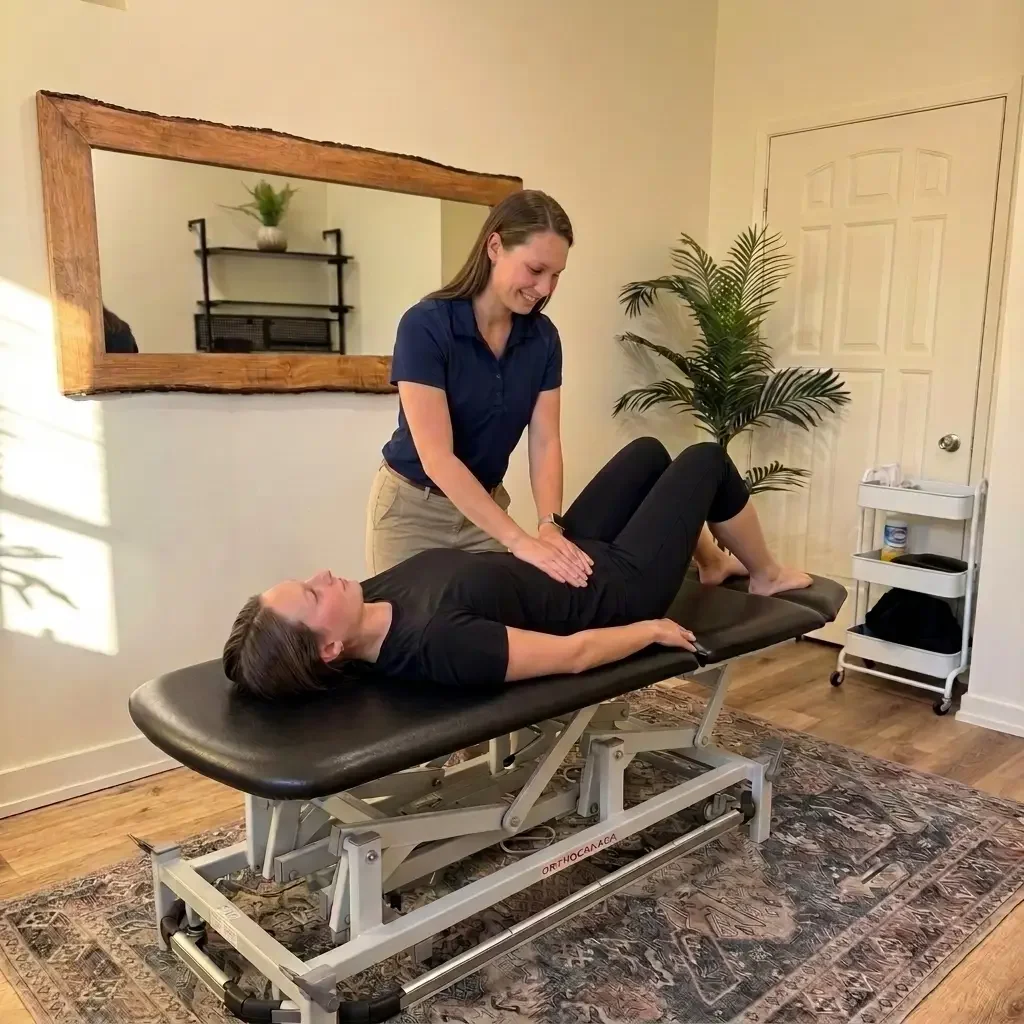
What Should You Expect from Physiotherapy Treatment?
| Stage | What Happens | Typical Duration |
|---|---|---|
| Initial Assessment | Natalie Di Croce conducts a comprehensive evaluation that covers the width and tension of your linea alba, diaphragmatic breathing mechanics, posture, pelvic floor coordination, and how you are currently managing intra-abdominal pressure. This produces a detailed clinical picture of your specific postpartum or core presentation. | 60 minutes |
| Treatment Sessions | Each session combines manual therapy to address tissue restrictions with targeted breathwork and progressive core exercises. As neuromuscular control develops, sessions incorporate dynamic, load-bearing movements matched to your fitness and lifestyle goals. | 45–60 minutes each |
| Typical Timeline | Most patients attend 1–2 physiotherapy sessions per week alongside a daily home exercise program. Many patients report initial functional improvements in core strength and back pain within 4 to 8 weeks, with progress often continuing over a 3 to 5-month period depending on individual presentation. | 12 weeks to 6 months |
How Do Diastasis Recti Treatment Options Compare?
Understanding the realistic scope of each available approach helps you make an informed decision about your recovery path. Below is a straightforward, objective comparison of the options many patients consider when addressing abdominal separation.
| Approach | What It Offers | Key Consideration |
|---|---|---|
| Physiotherapy | Hands-on assessment of linea alba tension, individualized progressive loading, manual therapy, and pelvic floor coordination. Often recommended as an evidence-informed first-line option for diastasis recti. | Requires active participation and consistent follow-through with a prescribed daily home exercise program. |
| Online Programs (e.g., MUTU, Bloom) | Accessible, self-paced guidance designed for general postpartum core recovery and fitness improvements. | General templates may not account for your individual tissue tension, breathing mechanics, or pelvic floor function. |
| Abdominal Binders | May provide temporary external support and some symptom relief during the early postpartum period. | Does not rebuild the underlying muscle coordination and tension that contribute to lasting functional stability. |
| Surgery (Abdominoplasty) | Structural repair of severe abdominal separation, sometimes considered when conservative rehabilitation has not restored adequate core function. | Clinical guidelines commonly recommend a supervised rehabilitation period first. Post-surgical physiotherapy may still play a role in rebuilding core strength. |
Physiotherapy for Diastasis Recti at OCR
Knowing what physiotherapy can accomplish for abdominal separation is one part of the picture — understanding how a specific clinic delivers that care is another. On Ossington Avenue, Natalie Di Croce and Austin McPherson combine targeted manual therapy, individualized progressive loading, and practical education designed to move you toward the functional outcomes you are working toward. This is active, partnered care built around your specific presentation — not a one-size-fits-all protocol.
If you are considering physiotherapy as your next step, you can learn more about our physiotherapy service at OCR and explore what that recovery journey looks like from initial assessment through to discharge.
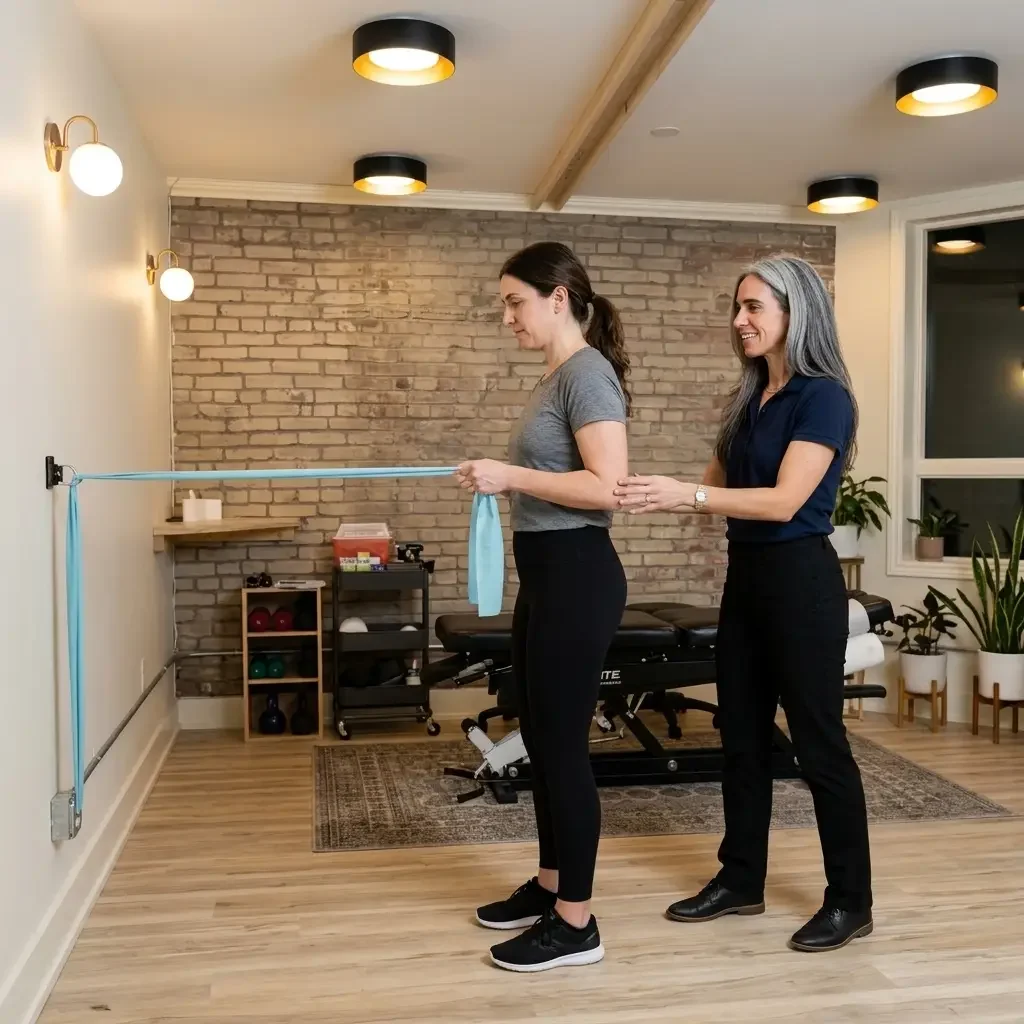
Why Choose OCR for Your Diastasis Recti Care
Diastasis recti assessments are not all created equal. The clinical depth and specificity that Natalie Di Croce brings to every session at OCR reflects a focused approach to women's health and postpartum rehabilitation that goes beyond standard core rehabilitation.
Clinician-Specific Training
Natalie Di Croce holds focused clinical training in women's health and postpartum rehabilitation — directly relevant to the functional recovery demands of diastasis recti.
Function Over Aesthetics
Assessment prioritizes linea alba tension and functional core performance, not just gap width measurements — because how your core performs in daily life is what ultimately matters.
Multi-Modal, Hands-On Care
Treatment integrates manual therapy, breathwork, and progressive loading in a carefully sequenced program — not a passive exercise sheet or generic protocol.
Partnered Recovery
You will leave each session with a clear roadmap, a home program you understand, and a clinician genuinely invested in supporting your progress toward your goals.
Serving Toronto's West End
OCR is located on Ossington Avenue in Toronto, ON, making it a convenient, walkable option for residents of Trinity-Bellwoods, Roncesvalles, Little Portugal, Dufferin Grove, and Parkdale. If you live in the west end and are seeking hands-on, highly individualized physiotherapy for diastasis recti, focused care built around your specific recovery goals is close by.
Insurance Coverage for Physiotherapy
Physiotherapy for diastasis recti is typically covered as a standard physiotherapy benefit under employer-sponsored extended health plans in Ontario. OCR does not currently offer direct billing; payment is collected at the time of your appointment and all necessary receipts are provided so you can submit your claim directly to your insurer. Before your first visit, we recommend confirming your plan's annual maximum and whether a physician referral is required by your policy.
Your Diastasis Recti Physiotherapy Questions, Answered
-
The number of sessions varies based on your individual assessment findings. Research supports consistent rehabilitation programs spanning 12 or more weeks, with most patients attending 1 to 2 sessions per week alongside a daily home program. Many patients report meaningful functional improvements within 3 to 6 months, and timelines adjust as you progress through the stages of care.
-
Physiotherapy is widely regarded as the recommended first-line approach for abdominal separation, with surgery typically reserved for severe presentations where conservative rehabilitation has not restored adequate core function. Even in cases where abdominoplasty may be appropriate, pre-operative and post-operative physiotherapy often still plays an important role in building and maintaining foundational core strength.
-
Standard movements such as crunches and sit-ups increase intra-abdominal pressure in ways that can aggravate diastasis recti rather than resolve it. Physiotherapy focuses on deep-core activation, transverse abdominis engagement, and pelvic floor coordination as the foundation, before progressing carefully to more demanding loads. Your program is built specifically around the tension of your linea alba and your individual functional goals — not a generic fitness progression.
-
Treatment is billed as standard physiotherapy and is typically included under extended health benefit plans in Ontario. We recommend reviewing your specific policy for annual coverage limits and any physician referral requirements that may apply. Please note that OCR does not currently offer direct billing; payment is collected at the time of service and detailed receipts are provided for you to submit directly to your insurer.
-
It is generally not too late to begin a diastasis recti rehabilitation program. Your core's neuromuscular system can often be retrained and strengthened at various postpartum stages, not just in the immediate weeks following delivery. Many patients who have been living with diastasis recti for several years report reductions in lower back pain, core instability, and urinary leakage through targeted physiotherapy.
-
While diaphragmatic breathwork is a foundational component for retraining how your body manages pressure, it is only the starting point of treatment. As your neuromuscular control improves, the program evolves into challenging, load-bearing functional movements tailored to your specific lifestyle and fitness goals. Whether you are working toward heavy lifting, running, or higher-impact activities, the rehabilitation plan is designed to progress you safely toward those outcomes.
“Rooted in Trust. Driven by Results.
Humbly serving the Ossington community and beyond, with care and compassion since 2015.”